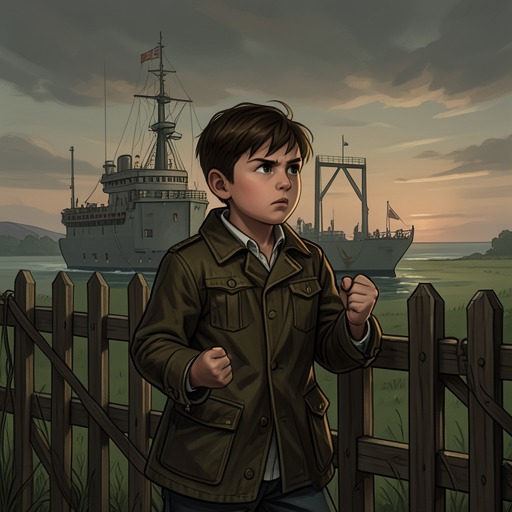
Robert and Arvid plan to emigrate
The EmigrantsRobert and Arvid plan to emigrate as an act of escape from the Swedish farm-service system, but their pact also reveals how unequal access to money and information shapes who can leave. Robert’s carefully imagined route to North America draws his friend into a shared future, only for the cost of passage to threaten their companionship almost as soon as it is formed.## From secret confidence to a shared planRobert reaches his decision through his friendship with Arvid. Seeing how deeply Arvid suffers from the degrading name “the Bull of Nybacken,” Robert understands that remaining in the neighborhood has become unbearable for him. He realizes that he must confide in his friend, and the next evening, in the sleeping farmstead’s stable room, moves close to Arvid’s bed and speaks in a whisper. Arvid promises silence, and Robert discloses his intention to escape service.## Robert’s route to AmericaRobert’s plan is rooted in an earlier attempt to find his way in the world and in the information he has gathered since then. Hidden beneath the straw of his bed is a small, brown-specked book, Description of the United States of North America. He has used it to learn about the country across the ocean, imagining America while doing farm labor and gradually making the distant land vivid in his mind. The book is more than a source of facts: it gives direction to a desire that his daily work cannot extinguish.Robert’s proposed escape is practical as well as aspirational. In the fall, Aron’s timber is to be hauled to Karlshamn, and Robert expects to go with the timbermen, driving his master’s old mare. Once Aron can no longer see him, Robert intends not to return; the mare will make her way home alone while he continues to the harbor and boards a ship for North America. When he asks Arvid to join him, he offers the journey as a means for his friend to leave Nybacken and the name attached to him. The plan turns the master’s own timber transport into a possible route out of service.## The price of passageThe pact’s first obstacle is not a lack of desire but the cost of turning desire into movement. Robert has learned that passage from Sweden to New York, with provisions, firewood, and fresh water included, costs 150 riksdaler for an adult. With the ten-riksdaler American entrance fee and additional expenses, each emigrant would need about 200 riksdaler. Robert can count on that sum from his inheritance, which remains with his brother in Korpamoen; Arvid has no savings.Arv id recognizes that even the most severe economy will not close the gap quickly. Two hundred riksdaler equals five years of wages. Even if he saved every penny and went without snuff, he would have to serve five more years at Nybacken. The prospect brings the pact to an abrupt pause: he sits down heavily, avoids Robert’s eyes, and admits that he cannot raise the fare. Robert’s inheritance gives him the ability to make the journey; Arvid’s poverty would leave him where he is, still marked by the humiliating name he hopes to escape.## A plan reshaped by the groupThe secret scheme is eventually overtaken by a larger migration. Robert and Arvid do not slip away alone with Aron’s timber. When emigrants from Ljuder meet at Åkerby Junction, Arvid is traveling with Danjel’s party, and Robert joins Jonas Petter’s wagon. The two farmhands from Nybacken are together again, now among a company that includes sixteen emigrants—nine adults and seven children. Their route to America has become part of a group departure, rather than the clandestine escape Robert first devised.## From intention to departureThe plan’s practical logic survives in the arrangements for the crossing. Karl Oskar and Robert have written to a firm in Karlshamn and secured a promise of passage on the Charlotta, a merchant vessel carrying both cargo and emigrants. They pay a 100-daler down payment for six people; Robert is also asked to seek a contract for Danjel if room remains. On April 14, 1850, the brig sails from Karlshamn for New York with 78 emigrants aboard. The migration that began for Robert and Arvid as a private escape now carries them through a regulated passage, in a vessel whose crowded hold offers little space to its passengers.Their departure does not erase the constraints that shaped the pact. The emigrants must endure a long crossing marked by confinement, illness, and hardship; when America finally comes into view, the sight of living green earth renews the spirits of passengers worn down by the voyage. The destination that Robert had first approached through the pages of a book becomes a real shore, but the crossing confirms that imagining escape and accomplishing it are different stages. Robert’s knowledge and inheritance help make the journey possible; Arvid’s companionship gives the escape a shared meaning, even though their means were never equal.